
Red, Orange & Pink Flowers

Rosa woodsii
Rose family (Rosaceae)
Known as the wild rose or the woods’ rose
Pinnately compound with alternating leaves
Perennial, deciduous shrub 1-7 ft tall
Grow well in sun to light shade
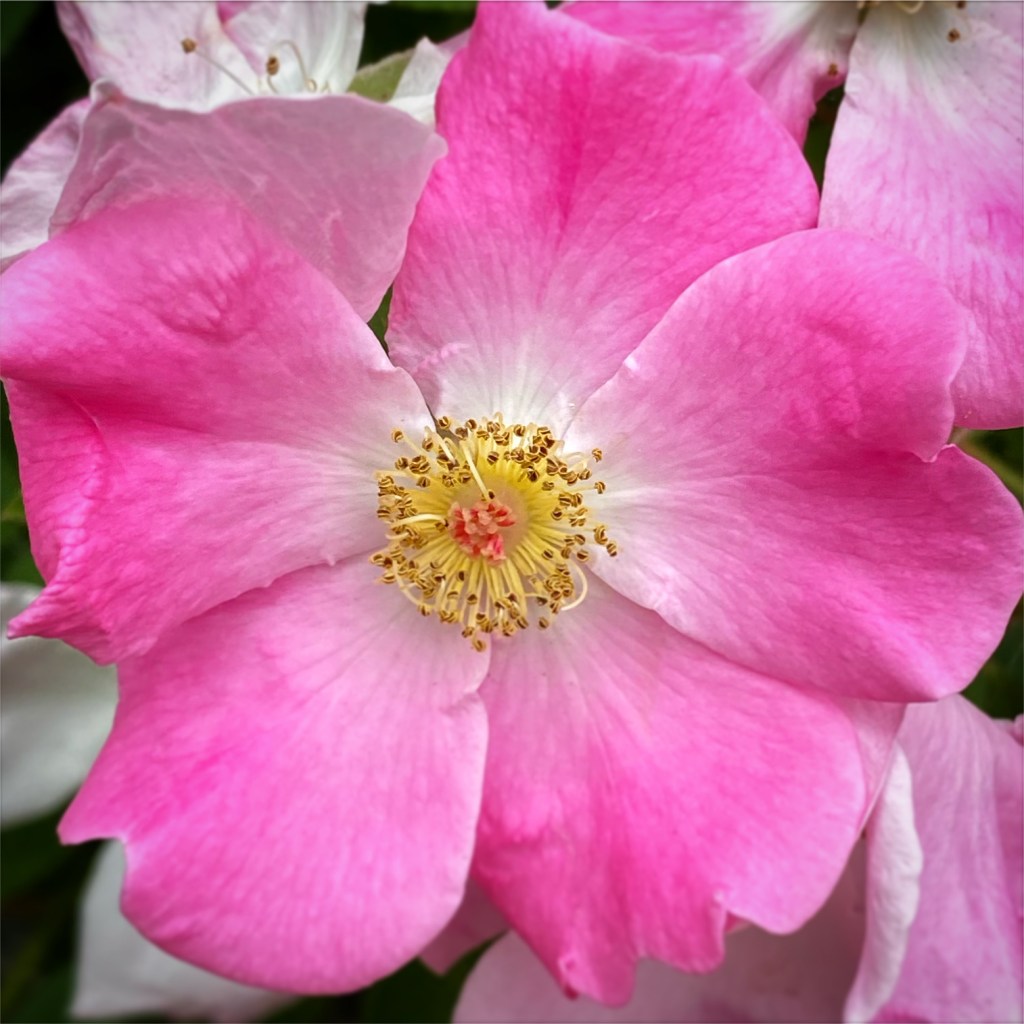
5 petals, varying in color from light to darker shades of pink
Several subspecies of Rosa woodsii exist: ultramontana, gratissima,
Commonly known as the woods’ rose or the wild rose, I lovingly like to put its two namesakes together and refer to it as the wild woods’ rose. This particular variety of rose holds a special place in my heart, not only because it is native and wild by nature, having never been modified or changed by humans, but because it is as beautiful as it is reliable, unmatched in durability for the Rocky Mountain region.
Found on plains, foothills to subalpine regions from 4000-10000 ft. It’s a rose that can withstand well below freezing temperatures and dryer, hotter, even drought-like conditions. It is attuned with the rocky, sandy soil and a great addition to a xeriscape or any other garden. They need little to no water and only a pruning here and there to keep blooming all summer long.
These bushes can grow quite large so plant accordingly. Give it less water than you do the rest of the garden if you would like it to stay a bit smaller, but no guarantees. The wild rose thrives happily in the American West.
This is a Rocky Mountain gardener’s favorite because it is both beautiful and native to this region, growing readily in virtually any kind of soil. A true and happy camper (in any type of soil).
The wild rose is both pest and disease resistant, making it an ideal addition to any garden.
Often can be seen when hiking along Rocky Mountain trails. Though perfectly suitable to grow in the Rocky Mountain region, they’re found widespread across much of North America South to Texas and North into Alaska.
Given enough water, the Woods’ wild rose will grow wildly out of control, but they can be cut back easily enough with few repercussions. Honestly, this raucous rose is more than a quintessential classic for any Rocky Mountain garden. When cut (deadheaded) properly, blooms will last all season long and in the autumn, orange-crimson leaves and bright red rose buds will still offer beauty to your garden.
Wild roses are indeed, the original rose, the literal origin of all other roses (from which they have been cultivated) for millennia.
Nice ground cover for small animals and birds – their thorny stems provide shelter from predators.
 The Rocky Mountain Gardener